
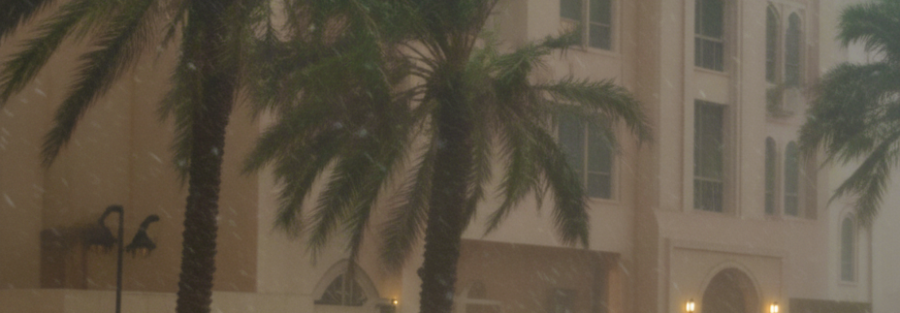
Living in Qatar means navigating unique environmental challenges while managing the practical demands of everyday life. Whether you’re weathering the fierce sandstorms and unexpected rains that catch our desert nation off guard, or planning your next home move, understanding your insurance coverage can make all the difference. At QGIRCO, we believe Informed homeowners are Protected homeowners.
Part 1: Weather Preparedness and Preventing Avoidable Damage
Understanding Qatar’s Weather Risks
Qatar’s climate presents a dual challenge: long arid periods punctuated by intense, unpredictable rainfall. This volatility was starkly illustrated in the April 2024 Dubai floods that subject the region’s vulnerability to extreme weather. Closer to home, Doha experienced this severity in October 2018 when 80% of annual rainfall fell in just 70 minutes, overwhelming drainage systems and damaging buildings, schools, and infrastructure, collapsing ceilings, disrupting elevators, Wi-Fi, and air-conditioning.
Beyond rainfall, Qatar faces regular threats from sandstorms and Shamal winds, which reduce visibility, damage property exteriors, and create hazardous conditions for residents.
Simple Steps to Prepare Your Home
Before the Storm Season
Inspect your property thoroughly, focusing on water-prone areas. Check your roof, gutters, and downspouts for proper drainage, and seal cracks around windows, doors, and foundations. Secure loose outdoor items that could become projectiles during sandstorms, and trim overhanging tree branches. Ensure your air-conditioning unit is properly sealed and elevated.
Inside your home, photograph valuable items and store important documents in waterproof containers. It is vital to know the location of your main water shut-off to minimize flood damage.
Emergency Preparedness
Keep emergency supplies on hand including water, first-aid kits, flashlights, and batteries. Have your insurance agent’s contact information readily available and know the steps for filing a claim. During extreme weather warnings, move valuable items and electronics to higher ground within your home.
The Critical Concept of “Preventable Damage”
Many homeowners overlook this crucial point: Insurance covers unforeseen events and not preventable damage from neglect or poor maintenance. Claims may be denied if damage was avoidable, such as interior water damage from a long-damaged roof or foundation issues from clogged gutters. To ensure coverage, always be prepared to demonstrate that you took reasonable steps to maintain your property through regular inspections, timely repairs, and proper drainage management.
Part 2: Moving Houses: A Transition That Needs Its Own Protection
The Moving Insurance Gap Most People Don’t Know About
Planning your move to a new home in Qatar? Understand that your homeowners’ insurance likely won’t cover damage to your belongings caused by movers or during the moving process itself. This creates a significant protection gap. While your homeowners’ policy covers theft, fire, and weather-related damage at your residence, it won’t cover damage during packing, transport, or unpacking.
Types of Mover Liability Coverage
Most moving companies are required by international standards to offer liability coverage for your belongings, but the level of protection varies significantly.
Released Value Protection (Basic Carrier Liability)
While this coverage is free with any move, it offers minimal protection, usually at a rate of just 60 cents per pound. So, if movers damage a 30-pound television worth QAR 2,000, you’d receive only QAR 11 in compensation. A 50-pound sofa worth QAR 5,000 would fetch you only QAR 30.
This coverage is essentially a legal minimum, and not a realistic protection for your belongings.
Full Value Protection
This is the superior option that typically costs around 1% of your shipment’s total estimated value. With full value protection, if an item is damaged, destroyed, or lost while in the mover’s custody, the company must either repair it, replace it with a similar item, or provide a cash settlement reflecting its current market value.
So essentially, to protect your household goods worth QAR 200,000, it would cost you QAR 2,000, which is worthwhile given the cost of potential losses from a single accident.
Separate Liability Insurance
Some movers offer third-party liability insurance that covers damage beyond the basic 60-cent-per-pound rate. Ask if this is available and get written documentation.
Always have a detailed conversation about insurance with your movers before hiring them about
What’s included in basic coverage vs. full value protection costs and limits? Are high-value items subject to limits? What’s the claims process, required documentation, and filing deadlines? Can they provide a certificate of insurance and written coverage details? What damage is excluded?
Protecting Your Belongings During the Move
Create an inventory with estimated values and photograph all items before packing as it is essential for claims. Flag high-value items (electronics, jewelry, antiques) and items needing special care (pianos, art, climate-sensitive pieces) to your movers in advance.
Always transport items of higher sentimental and monetary value yourself for complete control.
Security Deposits and Insurance Implications
If you’re renting your apartment, which is the case with almost all of us in Qatar, be aware that security deposit disputes sometimes arise when tenants move out. Document the condition of your rental property before moving in and after moving out with photographs and written descriptions to protect yourself against unfair security deposit deductions.
Conclusion: Knowledge Is Your Best Protection
Whether you are facing Qatar’s seasonal weather or planning a move, informed insurance decisions bring peace of mind. Review your coverage, ask questions, and choose appropriate protection, don’t assume your policy covers everything.
QGIRCO is here to help. Contact us to review your coverage, discuss moving protection, or prepare for seasonal weather. Your home is valuable; let’s protect it properly.